In “Art History with Katherine”, an art therapist introduced the work of Frida Kahlo and invited symbolic self-portraits of patients and caregivers. During the session, a mother texted in a photo of her artwork, sharing that it was the first creative act she’d done in weeks.
That sense of visibility, of being known and understood, is one of the studio’s most powerful impacts, especially for teens. KZTV’s mature programming, digital tools, and flexible hosting roles allow teens to engage on their terms. Options like digital art, virtual reality, and media editing align with adolescent identity. “Sometimes the right opening for a teen is not to ask them to talk about how they’re feeling,” Lu said, “but to hand them a controller, a camera, or access to a 3D printer, and say: Show me.”
Participation takes many forms. A young patient might help design a trivia game. A parent might share a poem. A long-term patient might become a director, working with staff to create their own edited video about something they love. “Behind the scenes is my favorite part,” said Noah, a young patient producer, “It takes your mind away from your pain.”
Volunteers and interns also find co-viewing powerful. Krista, now a college volunteer, and former patient and KZTV viewer, recalled helping a hesitant child co-host Bingo. “His dad thanked me afterward. That stuck with me.” Returning to the studio felt “full-circle.”
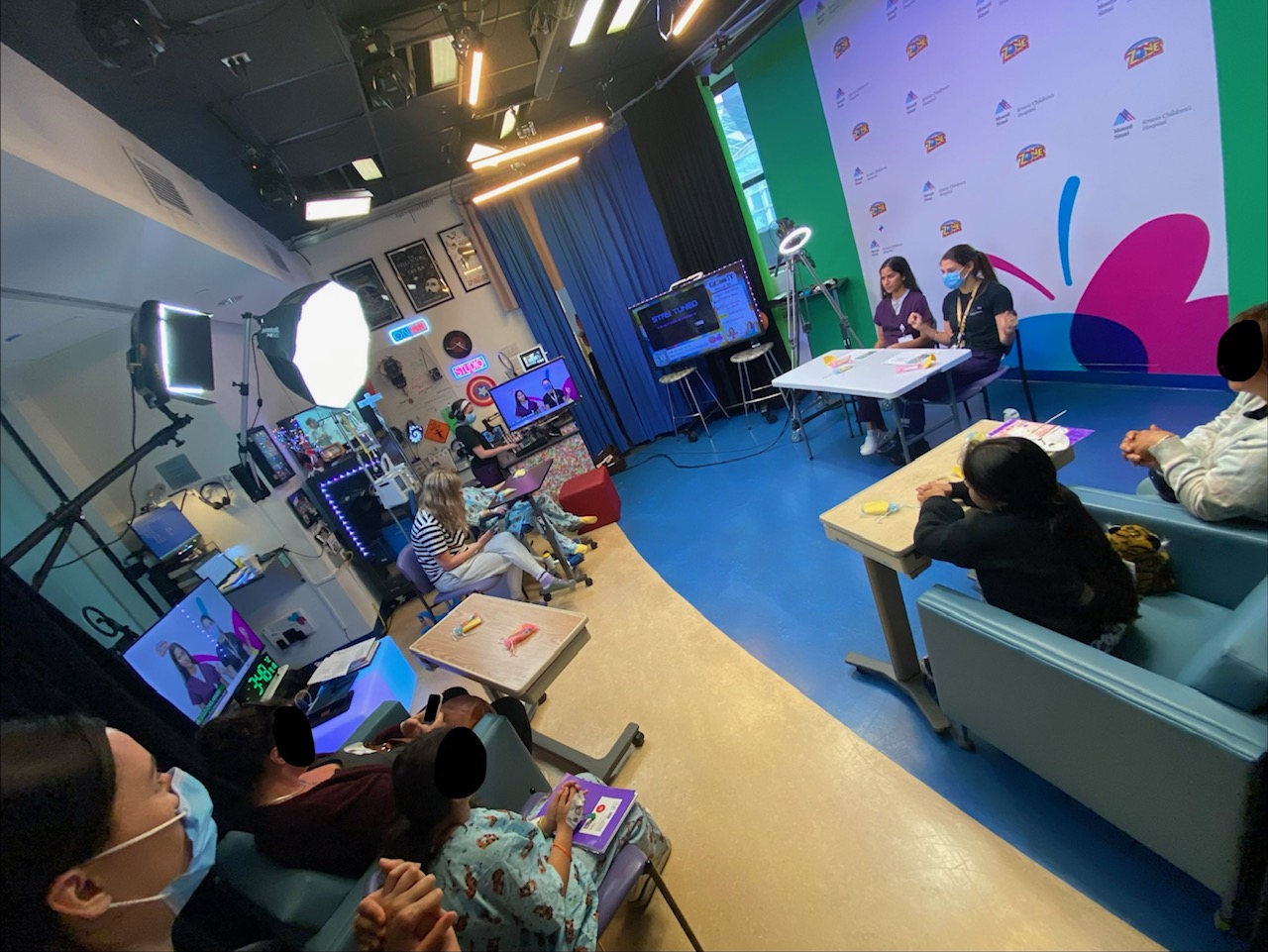
Getting Started (With or Without a Studio)
For CCLSs integrating programming, start small: choose one show each week to co-view intentionally with a patient. Treat the shared watching as an intervention-- stay present, follow cues, and use reflective, creative segments to build identity and confidence without requiring a child to speak about their feelings directly.
Even in settings without a dedicated studio, the core principles still apply. A tablet on a stand and a quiet room can create a moment of authorship. Recording short “strength messages” -- patients sharing encouragement or reflection, helps children see their stories and voices have value beyond their room.
The space itself is doing quiet work. The studio is not just a backdrop, its design, lighting, and materials promote emotional safety, offering structure and spontaneity. At its core, the studio is the network of collaboration, shared moments of co-viewing that bring patients, caregivers, and staff together. The heart of KZTV is the community that builds it every day: patients who lend their voices, the CCLSs who show up, and producers who keep everything flowing. As one CCLS put it, “Our studio, and our producers, change the associations children have with the hospital. They excel at amplifying patient voices and supporting their interests through KZTV.”
KidZone TV doesn’t replace clinical care; it extends it. Through voice, vision, and a room that holds space for creative authorship, patients leave something that can inspire others – a reminder that their presence, perspective, and story matter.