Skip to Content
ACLP
  • Practice
    • Why Child Life
    • Competencies & Standards
    • Emotional Safety Initiative
    • Career Center
  • Education
    • Online Learning Center
    • Earn PDUs
    • Child Life Conference
    • Mentorship Program
  • Certification
    • Become Certified
      • Academic Requirements
      • Eligibility Assessment
      • Pre-Internship Experiences
      • Clinical Internship
      • Certification Exam
    • Maintain Certification
      • Annual Maintenance
      • Recertification
    • Resources
      • Forms and Manuals
      • Child Life Code of Ethics
      • CCLS Digital Badge
      • PDU Pre-Approval
      • CCLS Directory
    • About CLCC
      • Governance
      • CLCC Policies
      • CCLS Connection Newsletter
      • Contact Us
  • Resources
    • Featured Resources
    • Publications
    • Directories
    • Child Life Professional Data Center
    • Networking
    • PRAP
    • Program Review
    • Child Life Month
  • Membership
    • Membership Programs
    • Individual Membership
    • Child Life Program
    • Child Life Supporter
  • About
    • Governance
    • Awards & Grants
    • Scholarships
    • Support
    • Contact Us
  • Exhibit/Sponsor
Scout
 

ChildLife: Blog

Addressing Traumatic News with Children and Teens

Friday, March 31, 2023

The mental and emotional health and wellbeing of children and teens can be heavily affected by their exposure to traumatic news or media (Leiner, 2022). With the rise of the 24 hour news cycle,  children and teens are exposed to media covering traumatic events more often than ever, which can lead to increased levels of stress, anxiety, and fear (American Academy of Child & Adolescent Psychology, 2020). From reports on COVID-19 deaths to coverage of gun violence, addressing traumatic news with children and teens is essential to their wellbeing. Here are six steps for talking to children and teens about news events from the American Academy of Pediatrics.

1. Ask what they have heard or seen.
2. Ask what questions they have and how they feel about what's happened.
3. Explain what happened in a developmentally appropriate way.
4. Avoid graphic details and monitor media exposure.
5. Keep adult conversations outside the earshot of children.
6. Assure them it's okay to be bothered, upset, or have big feelings, and remind them that you/their grownup are there to support them.
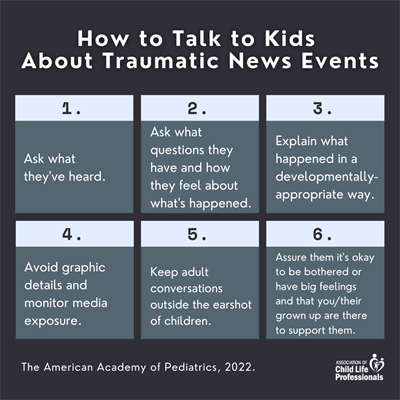
How to Talk to Kids About Traumatic News Events. Instagram Template


  • Practice
    • Why Child Life
    • Competencies & Standards
    • Emotional Safety Initiative
    • Career Center
  • Education
    • Online Learning Center
    • Earn PDUs
    • Child Life Conference
    • Mentorship Program
  • Certification
    • Become Certified
      • Academic Requirements
      • Eligibility Assessment
      • Pre-Internship Experiences
      • Clinical Internship
      • Certification Exam
    • Maintain Certification
      • Annual Maintenance
      • Recertification
    • Resources
      • Forms and Manuals
      • Child Life Code of Ethics
      • CCLS Digital Badge
      • PDU Pre-Approval
      • CCLS Directory
    • About CLCC
      • Governance
      • CLCC Policies
      • CCLS Connection Newsletter
      • Contact Us
  • Resources
    • Featured Resources
    • Publications
    • Directories
    • Child Life Professional Data Center
    • Networking
    • PRAP
    • Program Review
    • Child Life Month
  • Membership
    • Membership Programs
    • Individual Membership
    • Child Life Program
    • Child Life Supporter
  • About
    • Governance
    • Awards & Grants
    • Scholarships
    • Support
    • Contact Us
  • Exhibit/Sponsor
ACLP Contact Us Privacy Policy Terms of Use ©
Login